
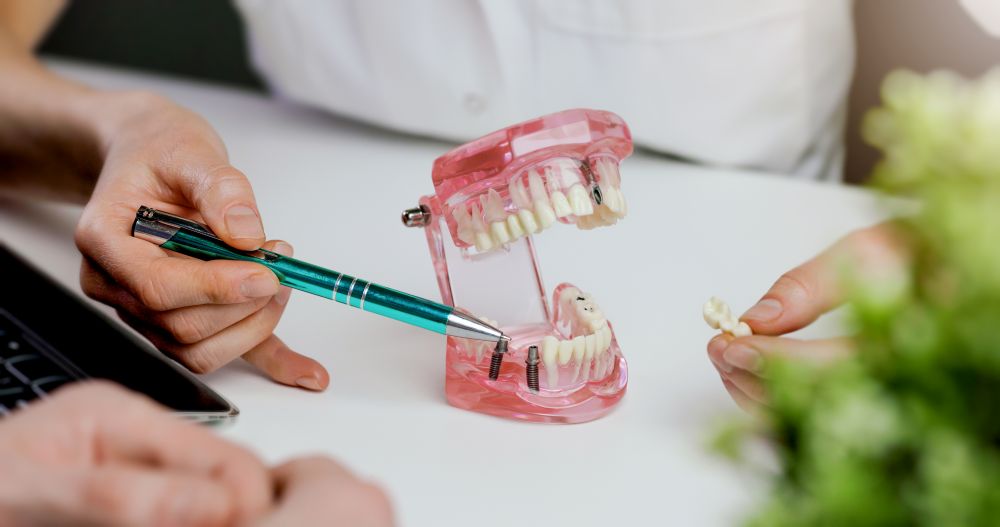
While it’s extremely important to replace your missing permanent teeth so that you can eat, speak, and smile with confidence, if the treatment isn’t safe, it’s probably not worth the trouble. If you’ve been considering dental implants but aren’t sure that this incredible restorative treatment poses a significant risk to your health, here’s the good news about the world’s only permanent tooth replacement solution!
What Are Dental Implants?
Dental implants are the only permanent tooth replacement option on the market today. They are attached via a titanium post that is surgically inserted into your jawbone. Like the roots of a real tooth, they provide proper stimulation to the surrounding areas to help keep the bones strong and your remaining teeth in their proper place. Furthermore, because they are securely anchored, they provide full biteforce, meaning you can use them to enjoy a full diet with no restrictions, and unlike dentures or dental bridges, they’re easy to keep clean (just brush and floss as usual) and won’t need to be replaced every five to ten years, saving you time and money!
Are Dental Implants Safe?
Dental implants do require several minor surgical procedures. First, you’ll need to have a procedure to attach them to your jawbones. This entails making an incision in the gums, as well as inserting the implant into the jawbone. Another minor surgery must occur when the abutments are placed and requires a second incision into the gums. Most healthy adults have no issues with either procedure, however it is important to fully disclose your medical history (including any medications you are taking) with your dentist prior to treatment, as certain medications and conditions could affect your outcome.
How Can I Increase My Odds of Dental Implant Success?
Dental implants have an astounding 95 percent success rate, even ten years after placement, but in order to ensure they last as long as possible, it’s important that you adhere to an excellent oral hygiene routine.
The two leading causes of dental implant failure are failed osseointegration (where the implant doesn’t properly fuse to the bone) and a condition called peri-implantitis, which is similar to gum disease and is caused by poor oral hygiene. Thus, be sure to brush and floss daily. Furthermore, be sure to avoid dangerous habits like biting nails or non-edible objects, eating anything excessively hard or sticky like ice cubes or hard candy, and smoking or using tobacco products.
Remember, dental implant surgery is considered very safe for most patients, however some medications and medical conditions could complicate your healing process. Thus, be sure to provide your full medical history to your dentist at your dental implant consultation, and to use and care for your new prosthetics safely for the best chances for success.
About Dr. Hansen
Dr. JD Hansen understands the power of a healthy, beautiful smile, and has made it his mission to help his patients achieve this goal. He earned his undergraduate degree at BYU and his dental degree at the University of Louisville, and during his GPR residency, he took a keen interest in wisdom tooth removal, veneers, and dental implants. To learn more about dental implants and see if you’re a good candidate for treatment, schedule a consultation with White Peak Dental by visiting our website or call us today at 801-719-2113.